FAQ
You can log in via admin.cloud.reddoxx.com. To use the app, you must log in by clicking on "Log in with Microsoft" with an MS 365 user who has the role of Global Admin.
Go to the Tenant configuration Tenant configuration and click on the button "Synchronize with Microsft 365"
You can log in via app.cloud.reddoxx.com. To use the app, you must log in by clicking on "Log in with Microsoft" with an MS 365 user who has a mailbox.
Currently only Microsoft 365 (Hosted Exchange) is supported in the REDDOXX Cloud
Please use the community support at Forum
You can find the prices here
This is described in detail in the relevant documentation: https://uma-rdx.docs.reddoxx.com/en
Step 1: Install the REDDOXX Toolbox
Step 2: In the REDDOXX CLOUD, set an access token for the mail import
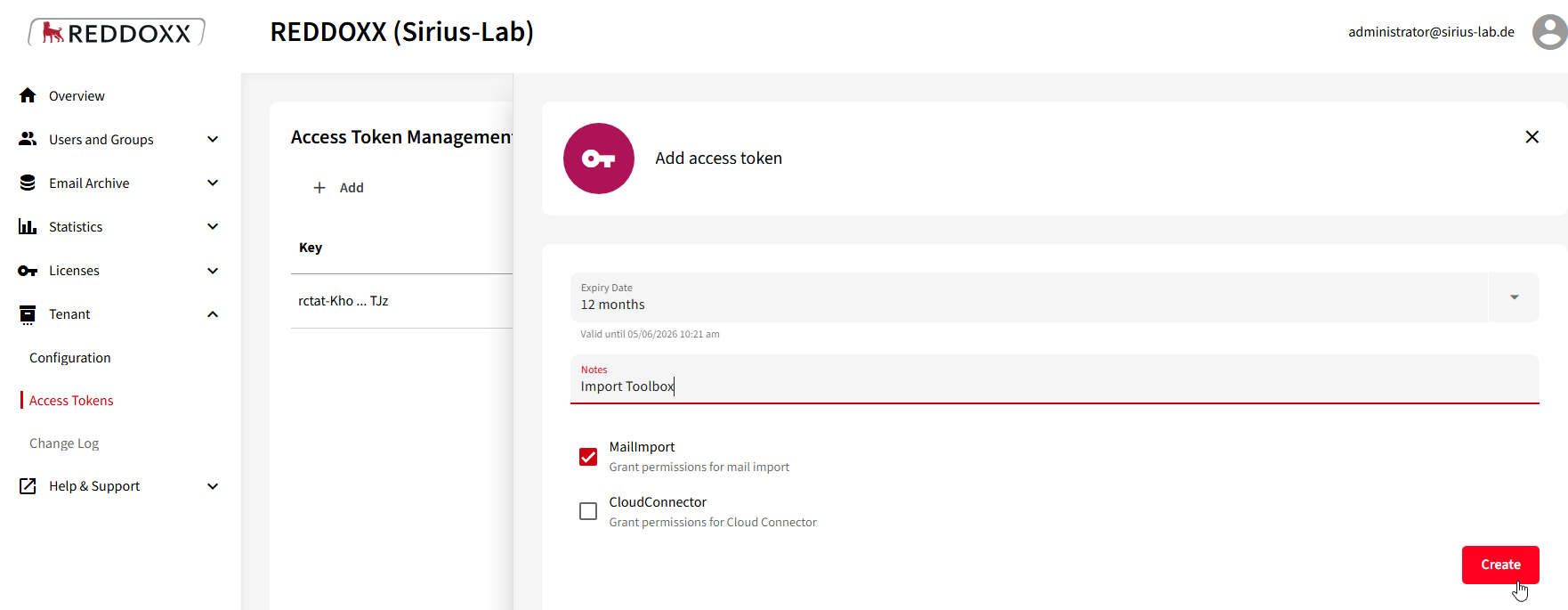
Step 3: Make a note of the access token and the Tenant ID
Step 4: In the REDDOXX Toolbox under Settings => Reddoxx Cloud set up the connection to the Cloud Container
Step 5: Use the import task that suits your environment (depending on the format of the E-Mails).
Using the toolbox
The trial period for the tenant has expired. REDDOXX has extended the trial period for all tenants until 15 January 2026.
For users to access the emails of employees who have left the company, they must be granted access rights to the corresponding email address. However, in most cases (e.g., with Microsoft 365), the user account and its address are deleted when an employee leaves the company (to save licensing costs).
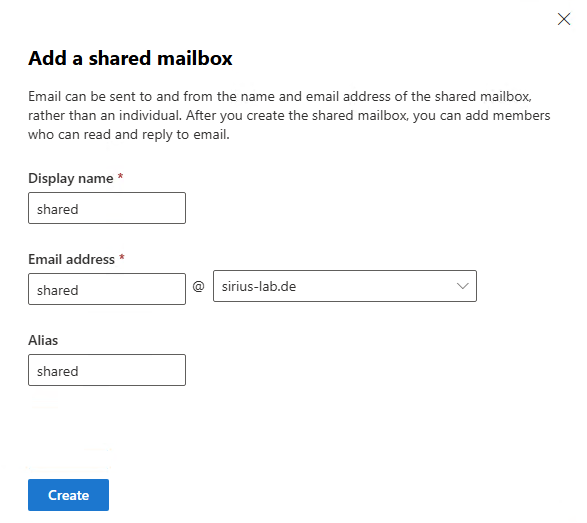
- Create a shared mailbox in Exchange (https://admin.exchange.microsoft.com/#/mailboxes), it is important that the email address matches that of the departed user:
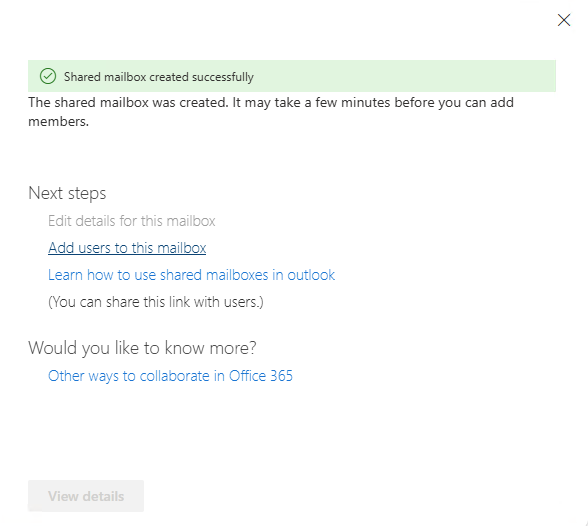
- Use ‘Add user to this mailbox’ to add the authorized users
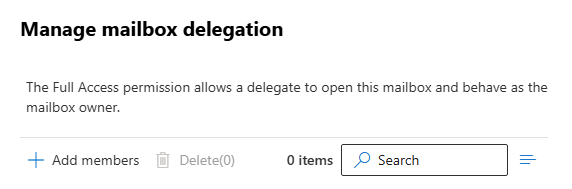
(If you need to add more users later, you can select the shared mailbox checkbox in the mailbox overview and then use ‘Mailbox delegation’), the important part here is ‘Read and manage (Full Access)" - In the REDDOXX Cloud, the permissions are then updated via Tenant ⇒ Configuration ⇒ Synchronize tenant:
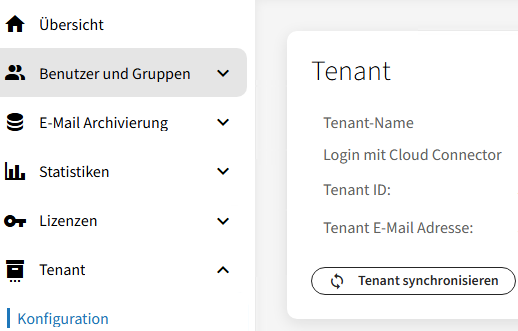
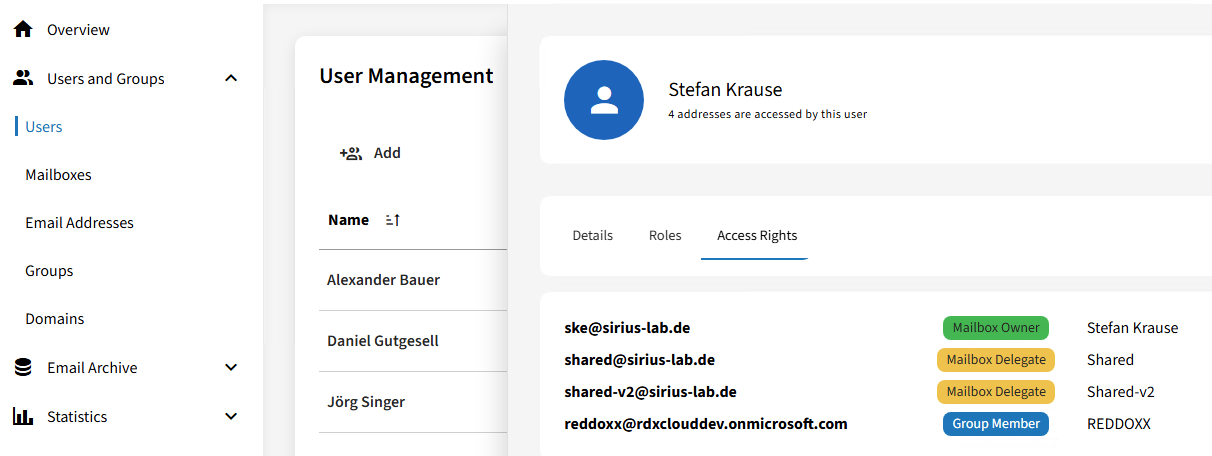
- You can then verify this under Users and Groups ⇒ Users ⇒ Access rights:
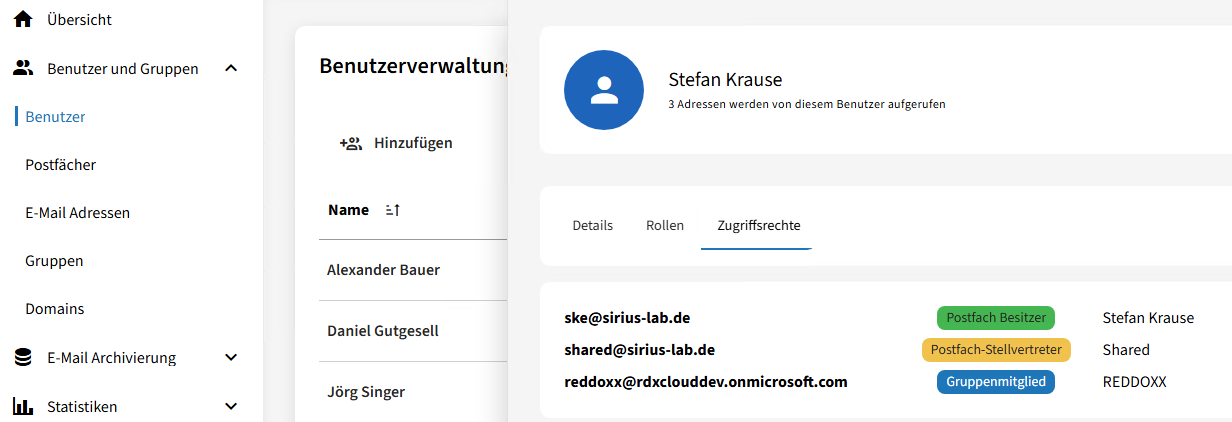
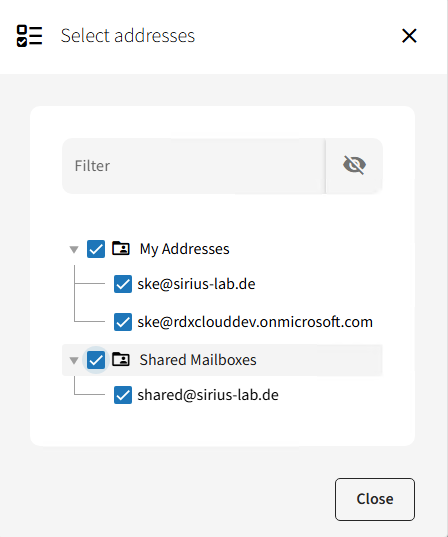
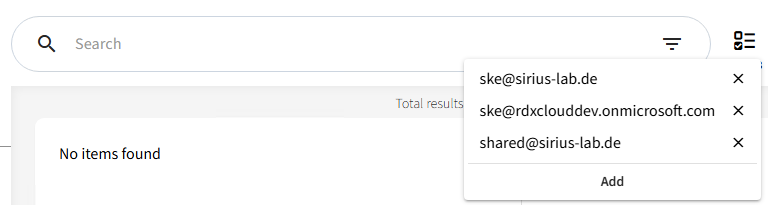
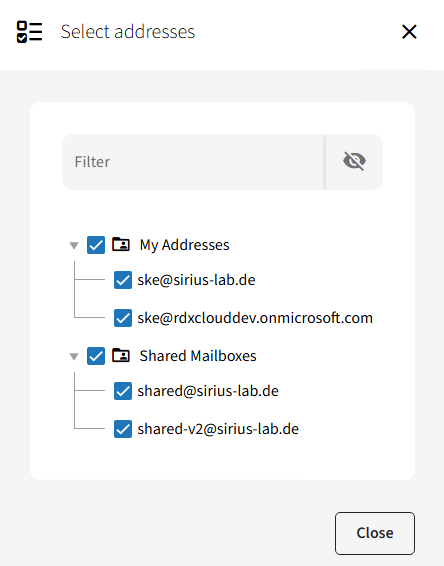
- Log in to the user area again and, via Add in the delegate selection, choose the new shared mailbox:
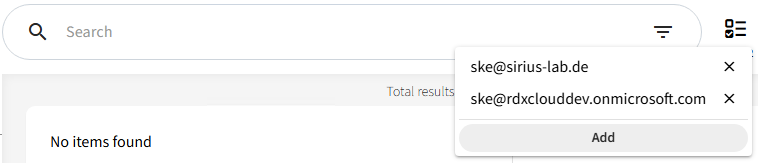
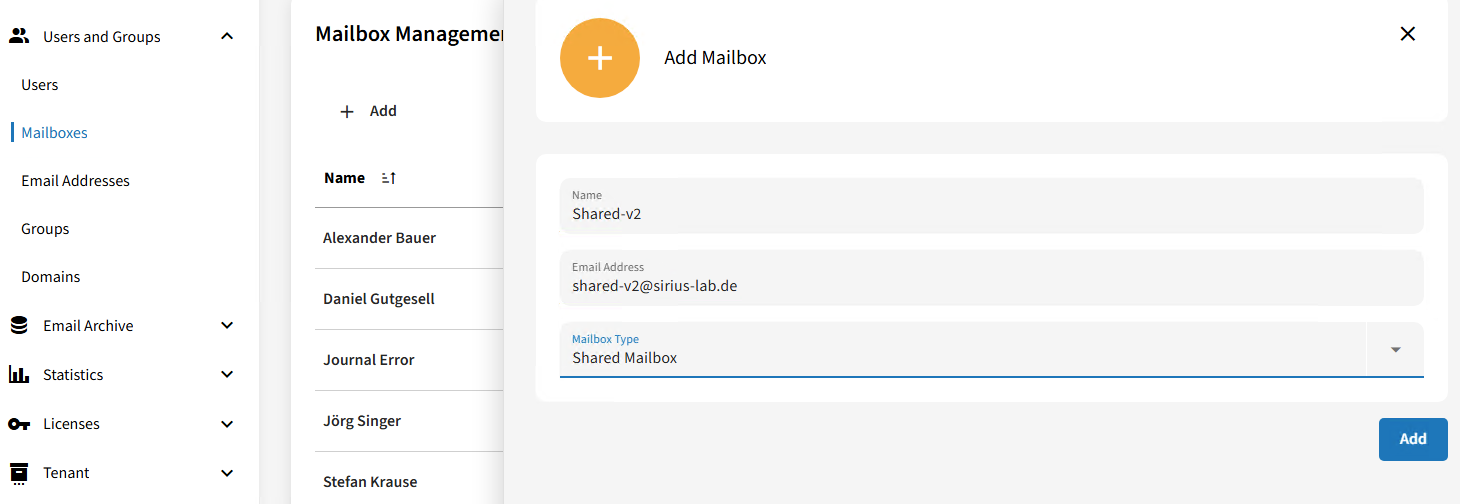
- Create a new shared mailbox under Users and Groups ⇒ Mailboxes via Add
The email address must match that of the departed user, and ‘Shared Mailbox’ must be selected as the mailbox type:
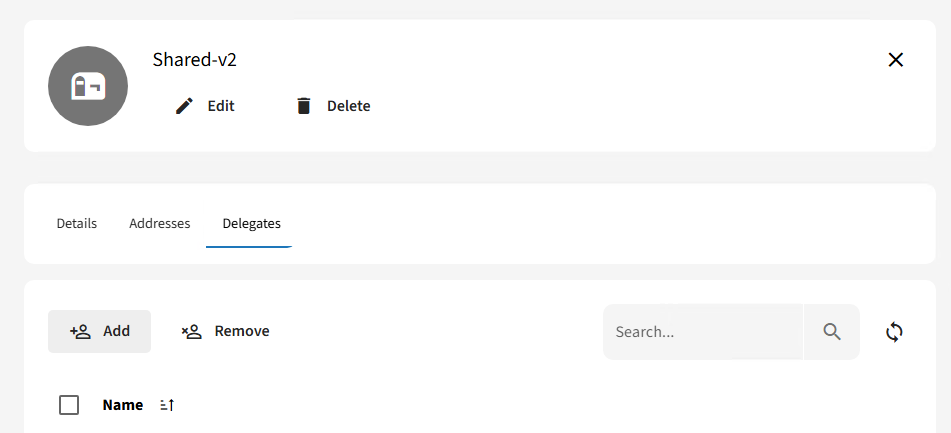
- Select the delegates for the shared mailbox:
- You can then verify this under Users and Groups ⇒ Users ⇒ Access rights:
- Log in to the user area again and, via Add in the delegate selection, choose the new shared mailbox:
This problem occurs when an email in SMTP transport contains LF (0x0A) instead of the expected CRLF combination (0x0D 0x0A) as a line break.
This can occur particularly with automatically generated emails. If such messages are subsequently forwarded to an SMTP system that processes messages strictly according to SMTP/RFC-822 rules, delivery may be rejected.
This naturally leads to an increase in NDR messages in the JournalError mailbox, especially for journaling destinations.
For SMTP message transport, CRLF is the defined line break (RFC 5321, based on the RFC 822 rules).
Our solution processes messages according to these specifications and continues to expect CRLF. Therefore, we do not plan to change our implementation.
Microsoft describes three possible approaches for Exchange Online:
-
Correction by the sender
The sender creates the message with correct CRLF line endings. -
SMTP CHUNKING / BDAT
The message is transmitted viaBDAT. This option is not available in our solutions (OnPrem with SMTP MailDepot Connector and Cloud Connector in our Cloud solution). -
Transport Rule in Exchange Online
Microsoft describes a workaround involving an inbound transport rule with a short disclaimer. This causes the message to be processed in such a way that the missing CRLF combination is added.
The procedure documented by Microsoft can be found here:
Microsoft Learn – SMTPSEND. BareLineFeedsAreIllegal NDR
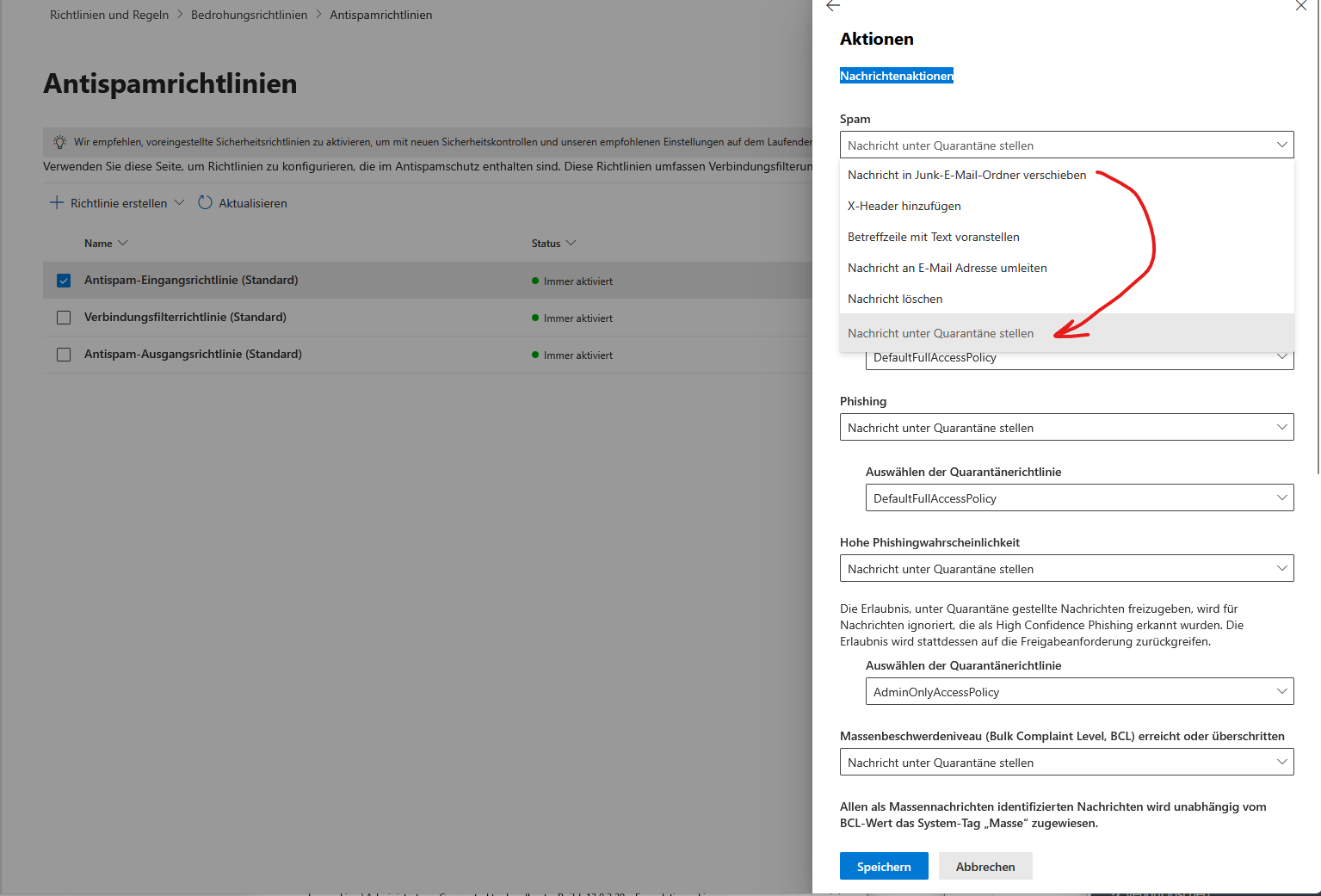
- SPAM Emails in Quarantine
Policy "Action for spam messages" from "Move message to Junk Email folder" to "Quarantine message" (analogous to the other categories).
Impact:
Spam emails are then held in quarantine instead of being delivered to the mailbox → no more journal triggering for these cases.
As a result, users lose the self-service capability to view/release junk emails directly in their own Junk folder – instead, they would have to release them via the quarantine notification/quarantine portal (if desired). This is a deliberate trade-off between convenience and precisely this side effect (journaling + potential NDRs for spam emails with missing CRLF).