Microsoft 365
To create a Tenant, you need a Microsoft 365 Tenant and the credentials of a user with global administrator role.
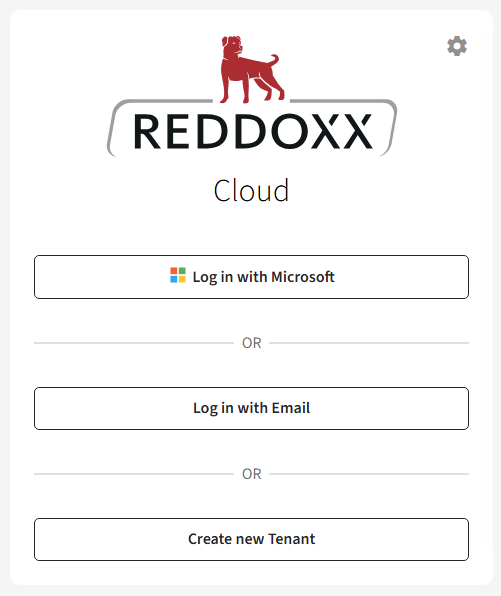
- Use the link https://admin.cloud.reddoxx.com and click on "Create new tenant"
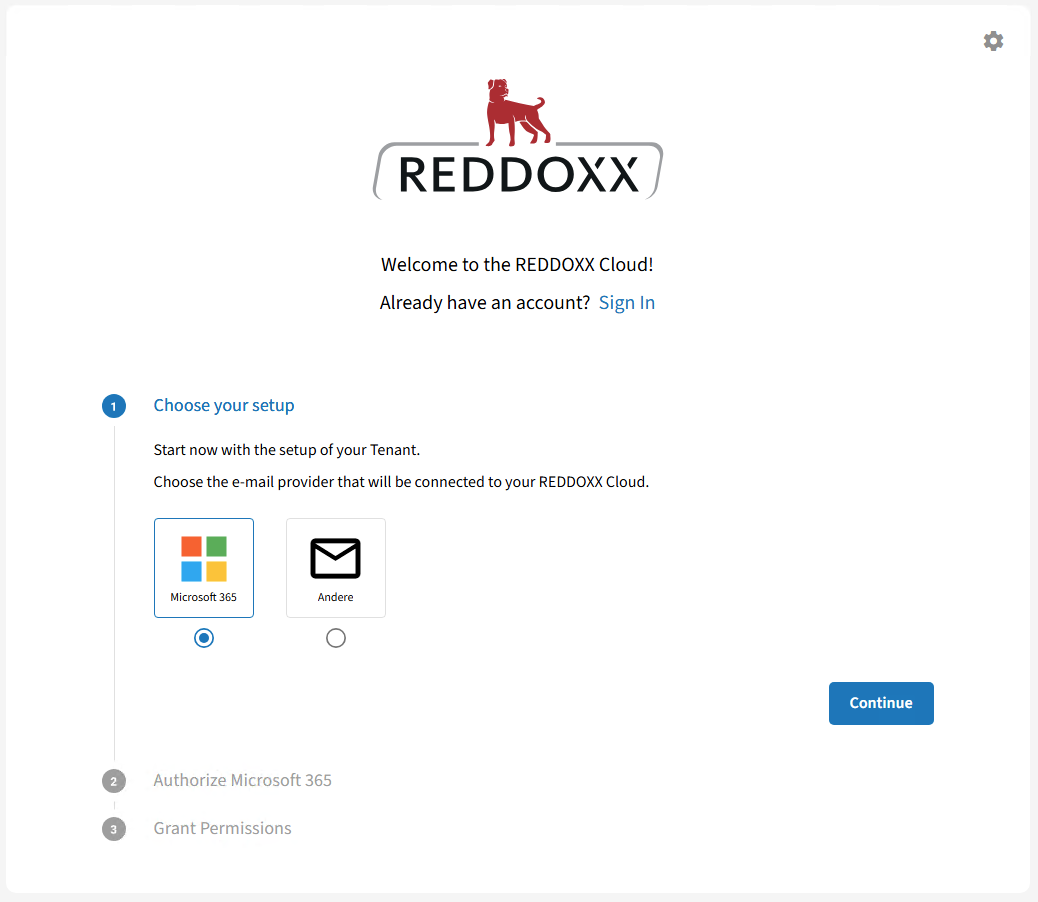
- Microsoft 365 is already preselected. Click on "Continue"
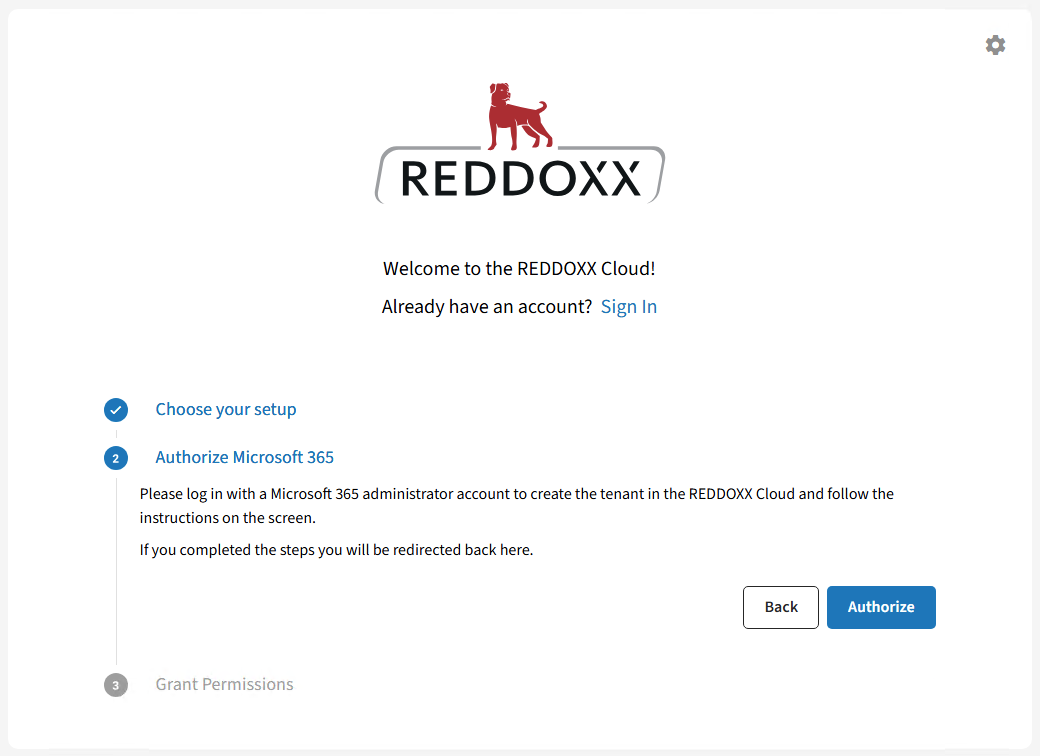
- Now log in as Global Administrator. Click on "Authorize" and log in
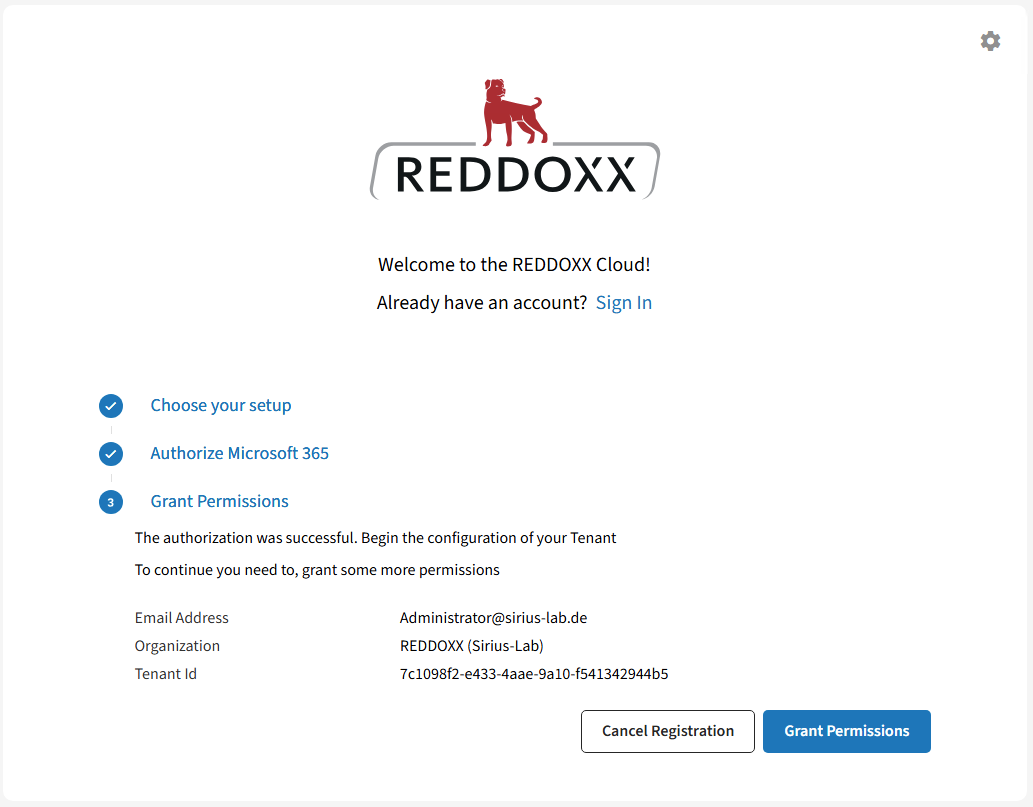
- Click on "Grant Permissions" and confirm with "Accept"
- Please enter a billing address as a company or private individual
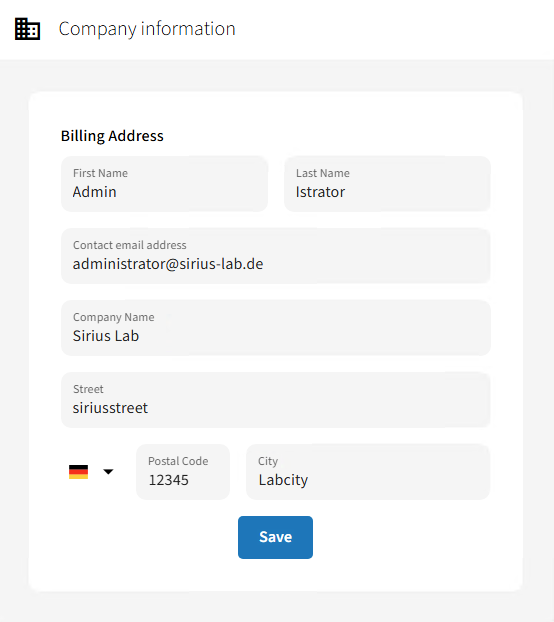
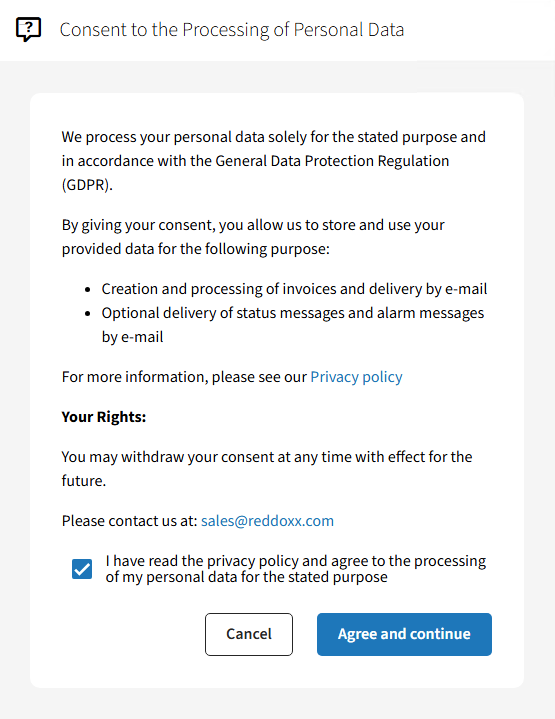
- Consent to the processing of personal data
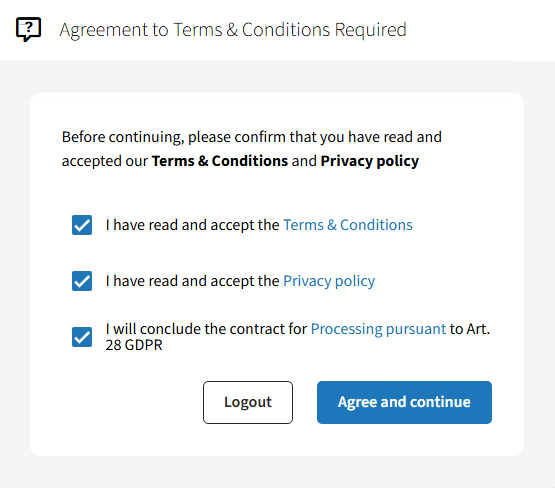
- Confirm the terms and conditions
Once the tenant has been created, a few more steps are necessary to make it fully operational.
The necessary steps are listed in the overview and are processed one after the other here.
By clicking on the respective items in the overview, you will be taken directly to the location where the change can be made
(with the exception of journaling, where a corresponding documentation page for setting up journaling in Exchange Online is called up).
Click on the link in the onboarding overview or manually open the following link:
https://cloud.docs.reddoxx.com/en/e-mail-server/365journal
This link describes how to set up journaling in M365.
The step is considered complete once the first email has been sent to the tenant address.
You can find the tenant address in the Tenant => Configuration area.
However, the step is checked cyclically in the background and may therefore be delayed slightly in the display.
Of course, any other email server that can send emails to this address via journaling or Always BCC can also be connected to the tenant journal address.
For correct, legally compliant archiving, it is important that all incoming and outgoing emails from your mail server are transmitted to this tenant address.
Under Email Archive => Import Sources, you can tick the mailboxes to be imported and start the import by clicking on "Start".
You can also define specific filters for the import.
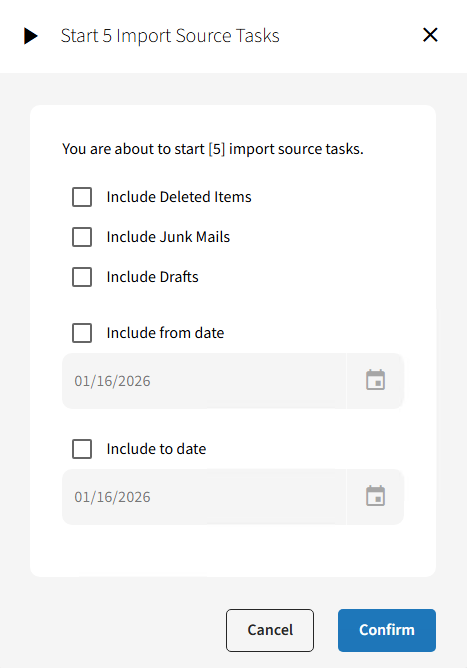
The import jobs are then scheduled and processed.
Depending on the utilisation of the backend and the size of the mailboxes, this process can sometimes take longer.
This step should already be completed by providing information about the company/private individual.
However, you can still click on the item and make changes if you wish.
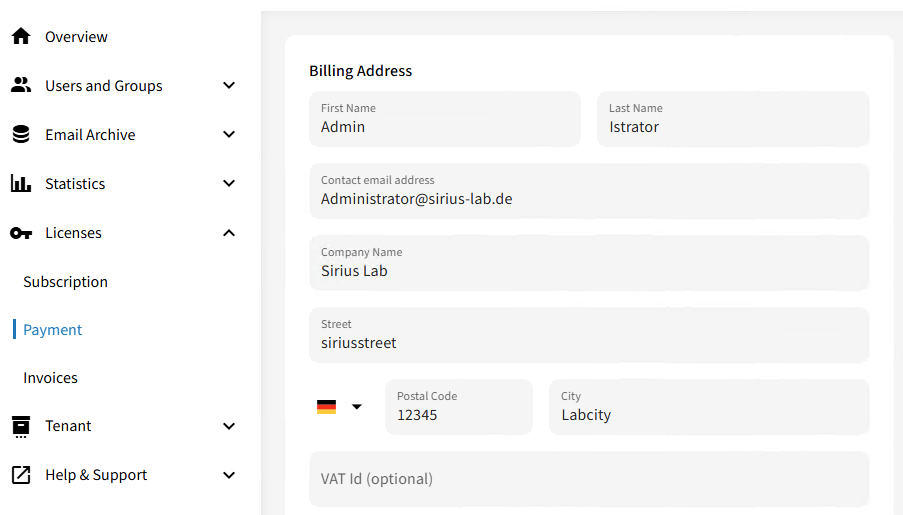
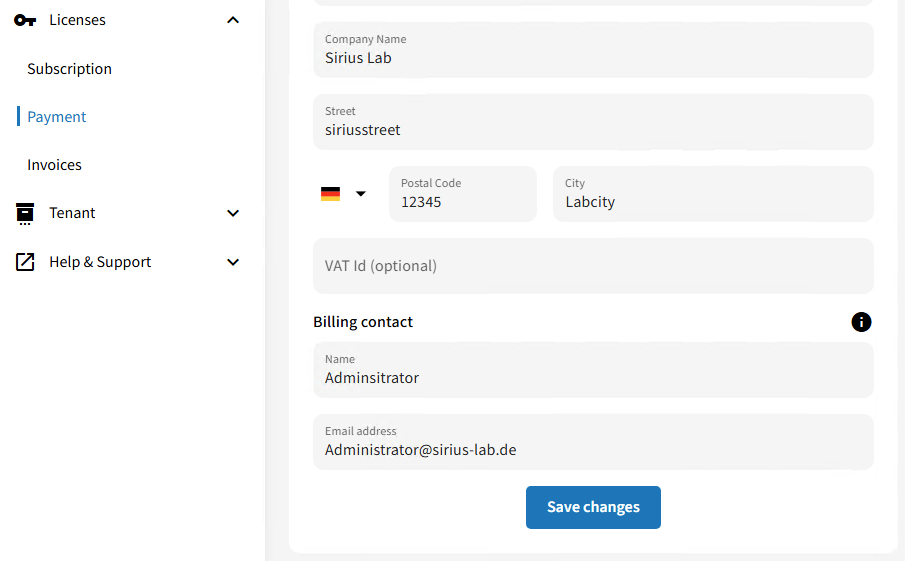
Click on the item in the onboarding overview or go to Licences => Payment manually to access the settings.
Please enter the name and email address of the billing contact here.
Invoices will then be sent to this address.
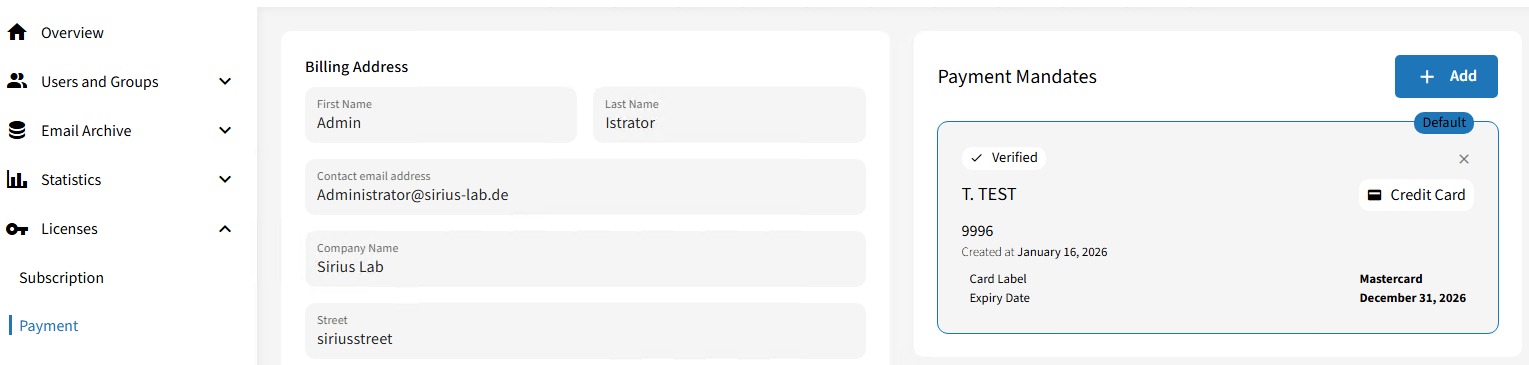
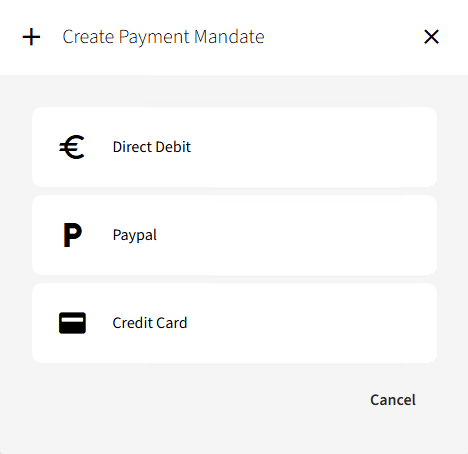
If you call up this step manually, you can add or remove payment orders under Licences => Payment => Payment mandates.
You can choose between direct debit, PayPal or credit card
In the Licences => Subscription section, you can see the current number of users and storage space usage.
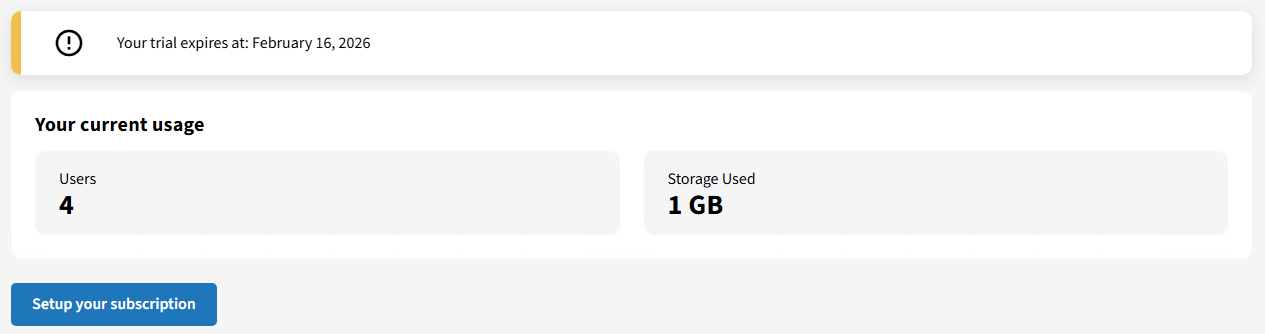
When you set up your subscription, a recommended licence model is suggested.
This means that 10% of your total users are suggested as montly user licenses to be more flexible.
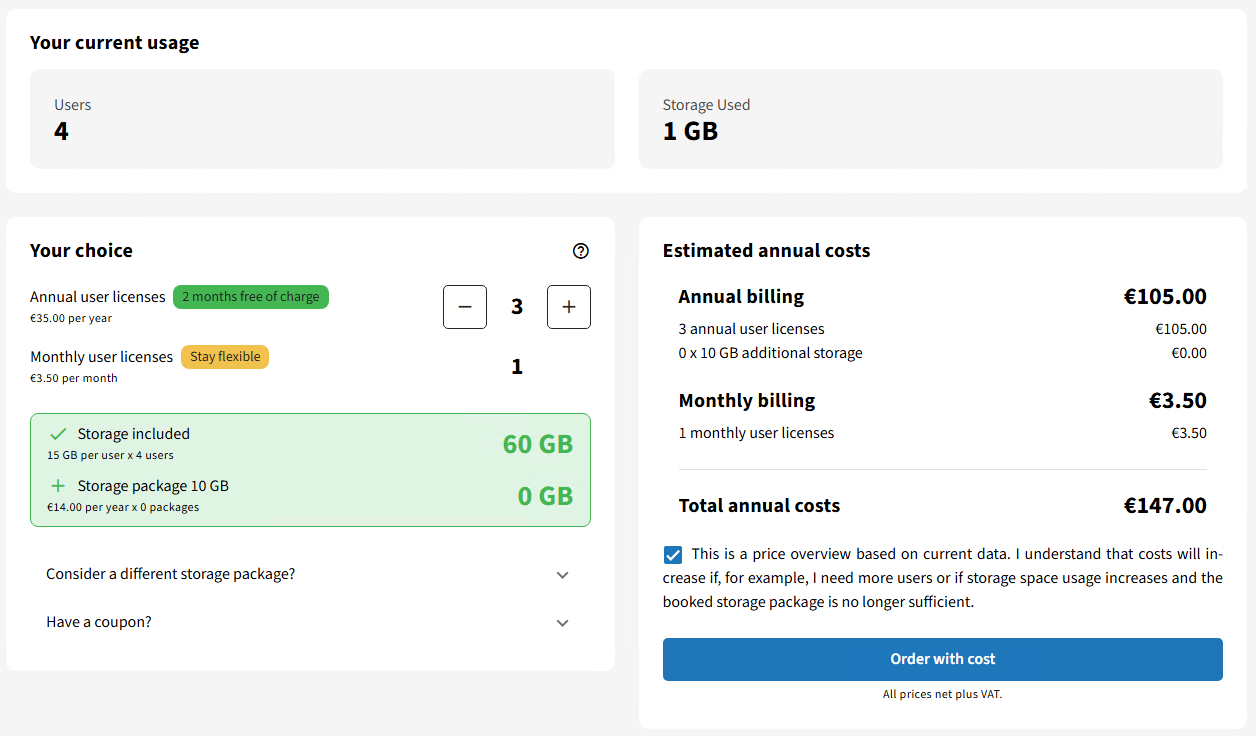
Each user is provided with 15 GB of storage space in the cloud.
The number of users therefore determines the total storage space provided in the cloud.
Finally, click on Order with cost.
If you already know inclusion or exclusion criteria for archiving, you can create these under Email Archive => Policies.
The rules are processed in the visible order. The first rule that matches is applied, all following rules are ignored.
You can move the rules using the ≡ symbol.
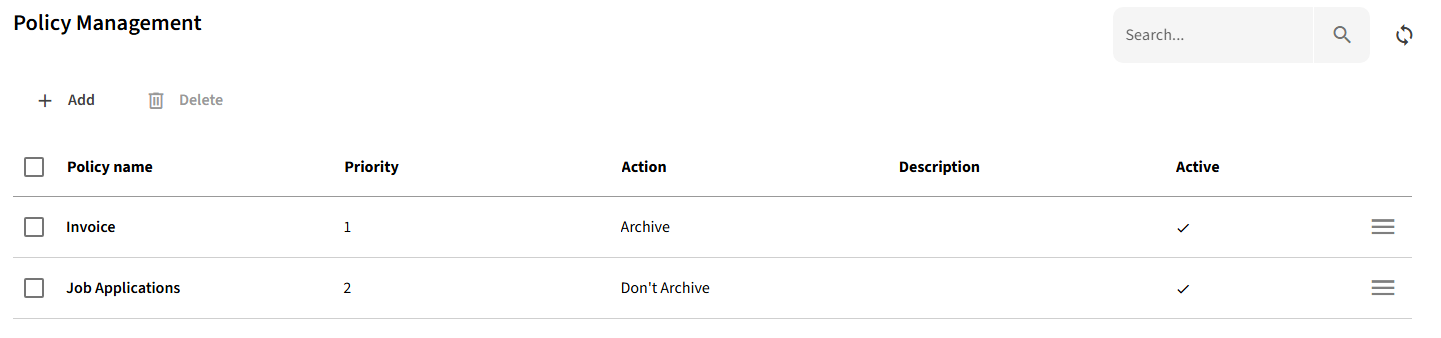
- click on "+ Add"
- provide a name for the rule and set the action (archive / don´t archive)
- specify the criteria in the Subject pattern, Sender pattern, Recipient Patterns and Size Filters tabs. Please note that the criteria are AND-linked.
- "Save" the rule
Without entries in this area, the appliance archives every E-Mail received via the tenant journal address.